

Why Laundry Rooms Get Messy (Even in Organized Homes)
Laundry rooms get chaotic because they serve multiple functions at once:
Drop zone for dirty clothes, shoes, and backpacks
Supply closet for cleaning products and extras
Processing station for washing, drying, folding, and sorting
Without a clear system, the laundry room becomes the default “I’ll deal with this later” space. A successful laundry room organization plan doesn’t rely on motivation, it relies on structure. The key is to create zones and assign homes for items based on how often you use them.
The 20-Minute Laundry Room Reset (Do This Before You Organize)
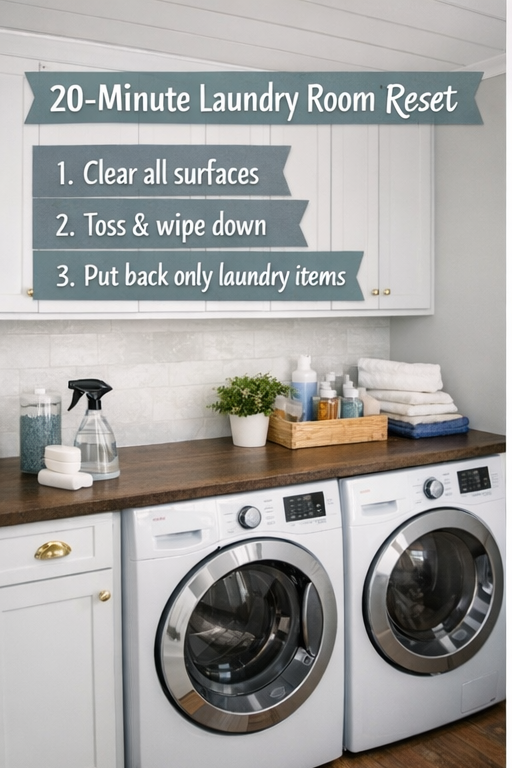
Before you buy baskets or label anything, do a reset. Organization only works when it’s built on a clean slate.
Step 1: Clear All Surfaces
Remove everything from:
Tops of machines
Countertops
Shelves
Floor corners
Any “catch-all” baskets that don’t have a purpose
Put items into 4 quick piles:
Laundry supplies
Clothes
Cleaning tools
Random items that don’t belong
Step 2: Trash + Toss + Recycle
Throw away:
Empty bottles and boxes
Old dryer sheets
Random packaging
Expired products you never use
Pro tip: If you have 10 stain removers, you don’t have “options” you have clutter.
Step 3: Wipe Down + Quick Clean
Wipe the machines, counter, shelves, and baseboards if you can. This takes 2-3 minutes and makes the room feel instantly refreshed.
Step 4: Put Back Only What Belongs in the Laundry Process
If you don’t use it in the laundry routine, it needs a new home. This one step is what keeps laundry rooms clean long-term.

The “Zones” System: The Secret to a Tidy Laundry Room
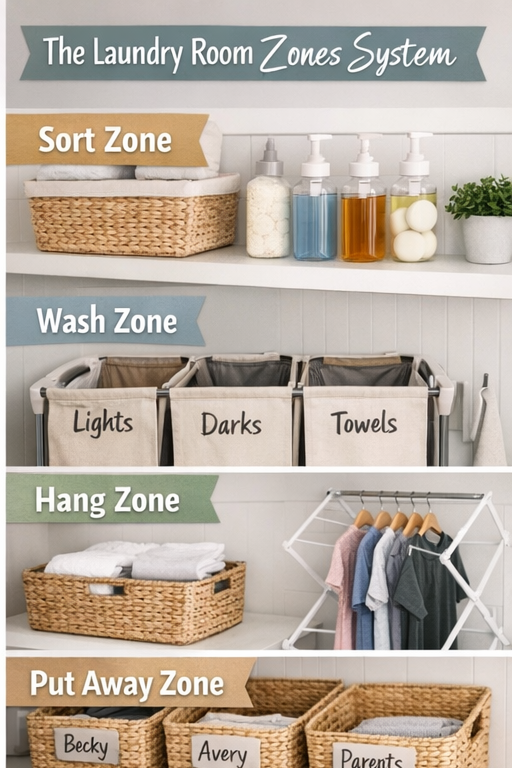
A functional laundry room has clear zones. When zones are obvious, everyone in the house knows where things go without asking.
Zone 1: The Sort Zone (Where Dirty Laundry Lands)
Set up a system that makes sorting automatic:
A 3-compartment laundry sorter (lights / darks / towels)
Two hampers + one tall bin for towels
A rolling sorter if you’re short on space
If you have kids, having a sorter is a game changer. Sorting upfront eliminates the “clothes mountain” later.
Zone 2: The Wash Zone (Daily Essentials Only)
Keep only your true daily items within reach of the washer:
Detergent
Stain remover
Scent booster (optional)
Dryer sheets or wool dryer balls
Everything else goes higher up or behind doors.
Laundry room cabinet organization tip: limit it to 1–2 detergents and one stain remover. This reduces visual clutter and decision fatigue.
Zone 3: The Dry + Hang Zone (Stops “Wrinkle Pile” Chaos)
This zone prevents clean clothes from becoming a wrinkled mess.
Add one:
Fold-down drying rack
Wall hooks
Over-the-door hooks
Slim hanging rod
Create a labeled basket for “Hang Dry” if your family tends to toss items on chairs.
Zone 4: The Fold Zone (Even If You Don’t Have a Counter)
If you don’t have counter space, you still need a fold zone.
Options:
Butcher block topper for machines
Slim folding table
Rolling cart that becomes a folding station
Make it easy and comfortable, this is where laundry gets finished (or doesn’t).
Zone 5: The Put-Away Zone (The Real Reason Laundry Piles Up)
This is the zone that changes everything.
Create a simple “delivery system”:
One basket per person (or per bedroom)
Label each basket
When a basket is full, it gets delivered
This prevents clean clothes from camping in the laundry room for days.
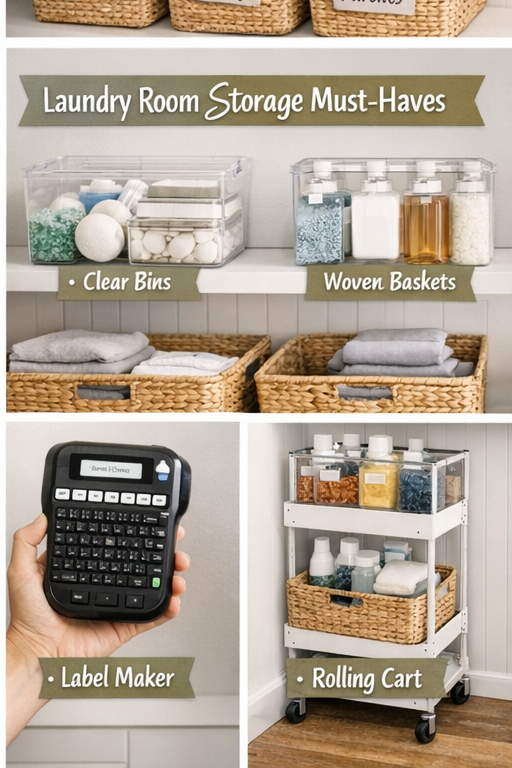
Laundry Room Storage Ideas That Actually Work
You don’t need more storage, you need better storage.
The Best Containers for Laundry Room Organization
Clear bins: keep supplies visible and neat
Woven baskets: hide visual clutter on open shelves
Turntables (lazy susans): perfect for sprays and stain removers
Shelf risers: double usable space in cabinets
Stackable drawers: great for small laundry rooms
What to Store Where (Easy Rule)
Daily items: lowest shelf / easiest reach
Weekly extras: upper shelf
Backstock (bulk): highest shelf or closed cabinet
Rare-use tools: tucked away in a labeled bin
Labels: The Fastest Way to Keep It Organized
Labels reduce confusion and stop people from putting things in the “wrong” spot (or leaving them out).
Label these:
Detergent pods / powder
Stain sprays
Dryer sheets / dryer balls
Cleaning cloths
“Lost socks”
“Donate”
Laundry room shelving ideas tip: if shelves are open, labels keep it looking intentional—even if you’re storing boring stuff.
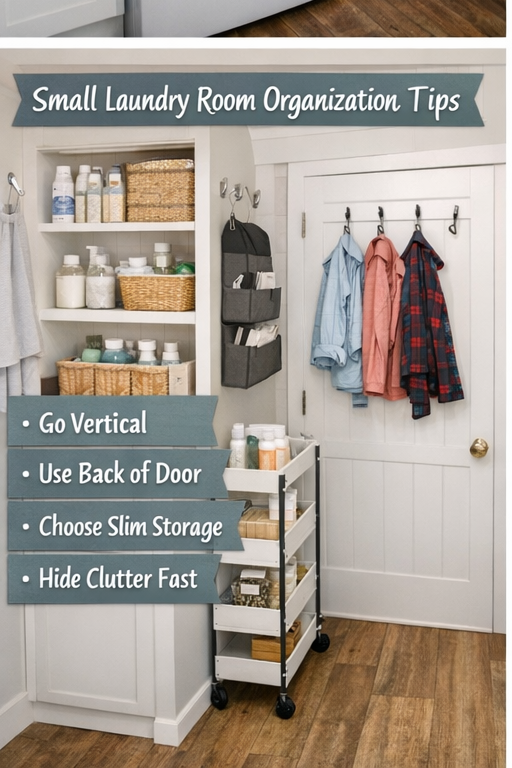
Small Laundry Room Organization Tips (For Tight Spaces)
If your laundry room is more like a closet, these are the highest-impact moves:
Go vertical: add shelves above machines
Use the back of the door: hooks + hanging organizer
Choose slim storage: rolling cart, narrow bins
Hide clutter fast: lidded baskets and matching containers
Create one “reset basket”: for anything that doesn’t belong
Even a tiny space can function beautifully if you keep it simple and repeatable.
Weekly Laundry Room Reset Routine (10 Minutes)
Do this once per week to keep your laundry room from slipping back into chaos.
Put random items into a small basket and return them to their homes
Refill detergent/pods and restock dryer sheets or balls
Wipe machines + clean lint area
Put baskets back on their shelf (Put-Away Zone reset)
Check “Donate” bag and remove if full
Optional monthly: run washer cleaner tablet and wipe inside the rubber gasket (front load machines especially).
FAQ: Laundry Room Organization
How do I keep my laundry room organized with kids?
Use a sorter (so clothes get sorted automatically) and a Put-Away Zone with labeled baskets for each person. Kids can carry their basket to their room when it’s full.
What’s the best laundry room organization system for small spaces?
Go vertical with shelves, use slim rolling carts, and stick to only daily essentials near the machines. Lidded baskets instantly reduce visual clutter.
How often should I reset my laundry room?
A quick 10-minute reset weekly keeps everything under control. Do a deeper declutter seasonally (every 3–4 months).